
The Show in Numbers
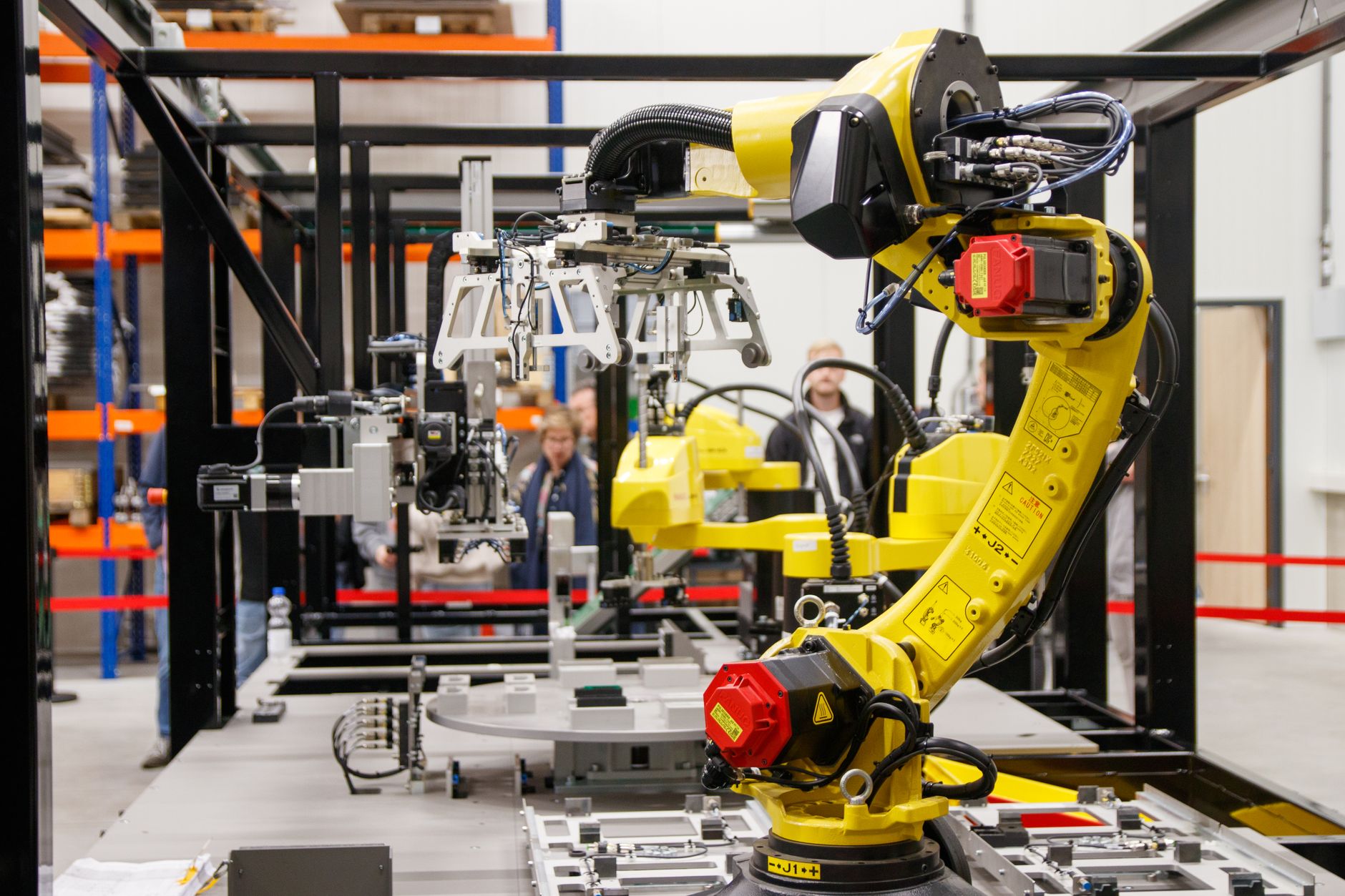
North America’s largest robotics and automation event just wrapped its most-attended edition ever. Automate 2026, organized by the Association for Advancing Automation (A3), ran June 22–25 at McCormick Place in Chicago and drew more than 50,000 registrants and 1,230 exhibitors across 425,000 square feet of show floor. The conference program hit a new record too — 1,600+ attendees and 140+ sessions focused on industrial AI, robotics adoption, workforce transformation, and supply chain resilience.
Those numbers matter less as bragging rights and more as a signal: the industrial automation industry is not contracting under AI pressure, it’s expanding because of it. The question Automate 2026 tried to answer was whether the technology is finally moving from controlled demo to actual deployment at scale. The honest answer: mostly yes, with important caveats.
Physical AI Was the Dominant Theme
Walk any aisle at McCormick Place this June and you heard the same two words: physical AI. Not as a marketing abstraction — as a description of what exhibitors were actually building and, increasingly, shipping. Physical AI refers to AI systems that perceive and act in the physical world: robots that see, adapt, and manipulate without hard-coded rules. The difference from traditional industrial automation is significant. Legacy systems need explicit programming for every scenario. Physical AI systems learn generalizable behaviors from data and simulation, then transfer them to hardware.
The practical implications were on display across the floor. Standard Bots’ Flux AI, which won the Automate Innovation Award in the Vision, AI and Software category, uses learned models to handle part variation without reprogramming — a longstanding headache in manufacturing lines that mix SKUs. Mbodi, winner of the Automate Startup Challenge ($10,000 prize), goes further: its platform lets operators teach industrial robots new tasks through natural language and simple physical demonstrations, bypassing the specialist programmer entirely.
NVIDIA’s presence anchored the physical AI narrative. The company sponsored a dedicated Humanoid Robot Pavilion — a first for Automate — and the Siemens–NVIDIA Industrial AI Operating System partnership was a recurring reference point in keynotes. Siemens Digital Industries headlined one of the packed keynote sessions. The two companies are building what they describe as an adaptive factory blueprint: digital twins that simulate process changes, validate improvements, and push updates directly to the shop floor. Their first fully AI-driven adaptive manufacturing site is planned for Siemens’ Electronics Factory in Erlangen, Germany, with a 2026 target.
Humanoids: Impressive Hardware, Murky ROI
Humanoid robots were the visual centerpiece of the show. The Humanoid Robot Forum ran June 23–24 alongside the main event and drew over 1,100 registrants — more than most dedicated robotics conferences manage on their own. Companies demonstrated bipedal and dexterous manipulation platforms across a range of use cases, from warehouse pick-and-place to light assembly.
The technology is genuinely further along than it was at Automate 2024. Platforms that were demo-only two years ago are now in limited commercial deployments. But the ROI question remains hard to answer. Integration costs are high, task flexibility is still narrower than the demos suggest, and maintenance contracts for novel hardware add uncertainty that procurement teams don’t like. The humanoid moment is real — but most manufacturers are watching carefully rather than purchasing.
More commercially mature, and arguably more consequential for near-term factory outcomes, was the expansion of collaborative robots (cobots). Every time Tim Culverhouse of Robotics 24/7 turned around at the show, he spotted a new cobot. That’s not hyperbole — the cobot market is expanding rapidly into heavier payloads and new applications, and the safety ecosystem around human-robot collaboration has matured enough that certifications are getting faster. Cobots are where the immediate ROI conversation is happening.
The Scaling Gap Is Narrowing — But Isn’t Closed
The headline statistic worth tracking: the AI pilot failure-to-scale rate in manufacturing has dropped from roughly 70% two years ago to around 30% today. That’s meaningful progress. A broader 2026 survey of manufacturers found that 56% now use some form of AI in maintenance or production operations, with semiconductor and electronics manufacturers leading at 82% adoption, automotive at 78%, and food and beverage at 45%.
The upside is real. Manufacturers running AI-driven predictive maintenance are reporting 30–50% reductions in total machine downtime compared to calendar-based preventive models, and a 20–40% extension in asset useful life. Deloitte’s survey of 600 manufacturing executives found 80% plan to invest at least 20% of their improvement budgets in innovative manufacturing initiatives in 2026.
The caveat is that the agent scaling problem — covered here in our mid-2026 factory AI pulse check — hasn’t gone away. A parallel survey found that 78% of enterprises have AI agent pilots running in some form, but fewer than 15% have reached production. The gap between “we’re testing this” and “this runs our operations” is still wide, and it’s mostly a data readiness and integration problem, not a model capability problem.
That point came up repeatedly in conference sessions. The organizations making the transition successfully shared a common pattern: they invested in operational technology (OT) data infrastructure before deploying AI, not alongside it. Companies that tried to bolt AI onto messy, siloed sensor data found themselves debugging data pipelines rather than improving processes.
What Automate 2026 Signals for the Year Ahead
The record attendance at Automate 2026 isn’t just an industry vanity metric — it reflects genuine capital commitment. The manufacturers showing up are not researchers or futurists; they are procurement leads, plant managers, and systems integrators with specific problems to solve and budgets to spend.
Three signals stand out from Chicago. First, edge computing is getting serious. More exhibitors than ever were demonstrating data collection and real-time inference at the robotic edge — on the arm, at the machine, not piped back to the cloud. This matters for latency-sensitive applications like precision assembly and quality inspection. Second, components are getting smaller and more powerful simultaneously: the GPUs, cameras, and processors enabling physical AI have shrunk to form factors that fit inside the robot itself, which changes what’s architecturally possible. Third, the software abstraction layer is finally catching up to the hardware. Platforms that let non-specialists configure and retrain robots — like Mbodi’s natural-language approach — lower the skill barrier for deployment significantly.
The Siemens–NVIDIA adaptive factory blueprint, if it ships on schedule in Erlangen, will become the reference architecture others benchmark against. The Industrial AI OS they’re building is designed to be licensable and repeatable — the goal isn’t one smart factory, it’s a template for many.
Physical AI is no longer a roadmap item. It was on the show floor, winning awards, and closing contracts. The industry’s challenge now is making the integration path fast enough that the gap between demo and deployment stops being the main story.
Further Reading
- A3’s official Automate 2026 recap — event statistics, award winners, and program highlights from the organizer
- Five observations from Automate 2026 (Robotics 24/7) — editorial perspective from the show floor on physical AI, cobots, and edge computing trends
- Siemens and NVIDIA expand Industrial AI Operating System partnership — the full announcement of the adaptive factory blueprint and Erlangen pilot