
The Physical AI Bottleneck
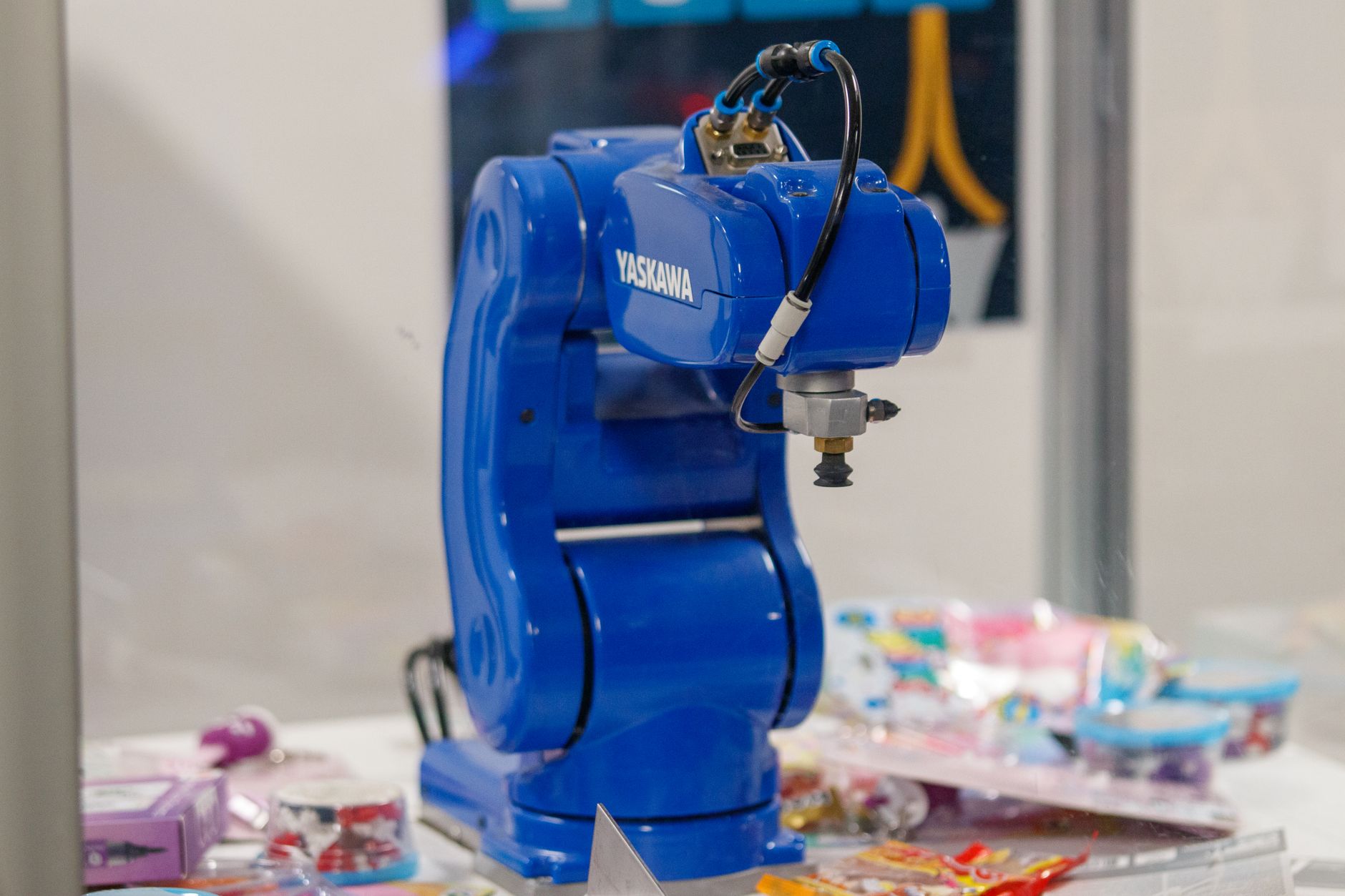
Every robot running a frontier AI model today faces the same problem: the brain is in the cloud. A robot arm on a factory floor sends sensor data to a data center, waits for the model to respond, and receives instructions back — across a network link that adds latency, cost, and a single point of failure. For tasks requiring sub-100ms decisions, that round-trip is not just inefficient; it is a fundamental architectural mismatch.
NVIDIA’s answer is Cosmos 3 Edge, a 4-billion-parameter open world model released on July 20, 2026 at SIGGRAPH in Vancouver. It runs vision reasoning and action generation directly on a Jetson Thor compute module — no cloud round-trip, no continuous network dependency, real-time control at 15 Hz.
What Cosmos 3 Edge Actually Does
A world model in robotics terms is a model that understands the physical environment well enough to predict future states and generate appropriate actions. Cosmos 3 Edge takes text prompts, images, and motion trajectories as input, then produces sequences of robot actions or predictions of what will happen next. It is a post-trained world action model (WAM) — trained on top of the larger Cosmos 3 family, then fine-tuned for the constraints of edge hardware.
The model operates at 640×360 observation resolution, generates 32 actions per inference, and achieves real-time control at 15 Hz on NVIDIA Jetson Thor. For manipulation tasks — picking parts, inserting connectors, assembling components — that responsiveness is what separates a useful robot policy from a demo. NVIDIA also ships a companion 2-billion-parameter dense reasoning module built on Nemotron that runs independently on hardware as modest as a Jetson Orin 8GB, giving developers a modular deployment stack.
Cosmos 3 Edge ranks first on VANTAGE-Bench for vision analytics in the 4B parameter class. NVIDIA released the full model weights, inference code, and post-training recipes on Hugging Face — developers can fine-tune on proprietary robot and sensor data using a DGX Station, then deploy the resulting policy to Jetson Thor.
The Cosmos 3 Family in Context
Cosmos 3 Edge is the third tier in a family NVIDIA has been building out across 2026. The 16B Nano and 64B Super shipped on May 31; Edge fills the lowest rung at 4B, designed specifically for on-device deployment. The family follows a clear architecture philosophy: train large, distill small, deploy everywhere.
The Cosmos-Dreams autonomous vehicle simulator makes the distillation progress concrete. The system previously required 64 GB300 GPUs to generate photorealistic driving worlds. It now runs frame by frame on a single NVIDIA RTX PRO 6000 workstation card — same outputs, roughly one-sixty-fourth the compute floor. The same trajectory applies to Cosmos 3 Edge for robotics: capabilities that required data center hardware in 2025 now fit on a $600 compute module in 2026.
Who Is Building With It
NVIDIA confirmed four organizations evaluating Cosmos 3 Edge for production robotics workflows: Agile Robots, Doosan Robotics, Siemens, and Skild AI. These span collaborative robot arms, industrial manipulation, and generalist policy learning — a range that suggests the model’s architecture is flexible enough to cover meaningfully different physical setups.
Siemens is the most significant name on that list for enterprise readers. The company has been building toward an AI-native factory operating system for over a year — vortx.ch covered the Siemens-NVIDIA industrial AI OS here — and Cosmos 3 Edge fits directly into that stack: an on-device model that handles real-time perception and action without a cloud dependency mid-shift.
Skild AI is worth watching separately. The Pittsburgh-based startup is building a generalist robot foundation model — a single policy that operates across different robot bodies without per-platform fine-tuning. Using Cosmos 3 Edge as a post-training base accelerates that work considerably, since NVIDIA has already solved the edge deployment problem. A working generalist policy built on top of Cosmos 3 Edge would be a significant validation of the entire approach.
The Infrastructure Bet Running in Parallel
Physical AI at scale requires more than smart edge models. It requires the compute infrastructure to train those models, the memory bandwidth to serve the largest tiers, and the manufacturing capacity to build the hardware. A separate NVIDIA announcement from July 24 signals just how seriously the company is building out that layer.
SK Group and NVIDIA announced a $500-billion-plus strategic partnership covering AI factory construction and next-generation memory co-development. SK Telecom will build a 2-gigawatt NVIDIA Vera Rubin DSX AI Factory in South Korea, while SK Hynix and NVIDIA jointly develop next-generation HBM and AI memory technologies. At over half a trillion dollars in committed investment, it is one of the largest technology infrastructure deals on record.
The relevance to physical AI is direct. Training world models well requires massive compute and high-bandwidth memory. HBM4 is a bottleneck for the largest Cosmos 3 tiers today — the SK Hynix partnership is designed to remove that bottleneck by 2027 or 2028. The inference side is covered by Jetson Thor; the training side is covered by the Vera Rubin AI factories. NVIDIA is vertically integrating the physical AI supply chain in a way no other company currently matches. (More on Vera Rubin’s economics here.)
Why the Edge Shift Matters Now
Cloud-connected AI made sense when models were primarily doing language and reasoning tasks — latency of a few hundred milliseconds was invisible to a user reading text. For robots operating in physical environments, it is not. A robotic arm picking parts at 120 cycles per minute cannot wait 200ms for a cloud inference. An autonomous vehicle navigating construction zones cannot rely on a mobile network that may drop in a tunnel.
The move to on-device physical AI is not primarily a cost story — it is a capability story. What Cosmos 3 Edge enables is a class of applications that simply was not possible with cloud-only inference: fully autonomous robot behavior in radio-denied environments, sub-100ms perception-action loops, and continuous operation without API rate limits or data center dependencies.
The enterprise AI factories that NTT DATA and NVIDIA built earlier this year focused on making cloud AI reliable for back-office automation. That remains valuable. But the harder problem — getting AI to operate physical machinery in real time, in the real world — is what Cosmos 3 Edge is actually targeting.
What to Watch
Three things will determine whether Cosmos 3 Edge delivers on its promise. First, how well the open-weight post-training workflow generalizes: can developers actually fine-tune it on proprietary robot data and get a deployable policy without NVIDIA’s full DGX stack? The released recipes will be stress-tested fast. Second, whether VANTAGE-Bench rankings hold on real manipulation hardware — leaderboard performance and factory floor performance frequently diverge. Third, whether Skild AI’s generalist policy work progresses, since that outcome will be a leading indicator of whether the train-once, deploy-anywhere vision of physical AI foundation models is achievable in 2026.
For now, the release represents a genuine inflection point: the first generally available, open-weight physical AI world model that runs at real-time speed on commodity edge hardware. The robotics industry has been waiting for this tier of the stack for two years. The question is no longer whether on-device physical AI is possible — it is who ships it in production first.
Further Reading
- NVIDIA’s SIGGRAPH 2026 blog — full summary of Cosmos 3 Edge, DLSS 5, and MCP integrations announced at the conference
- Cosmos 3 Edge on Hugging Face — official release post with model weights, post-training recipes, and architecture details
- SK Group + NVIDIA partnership press release — the $500B+ AI factory and HBM memory co-development deal in full