
Why This Launch Is Different
OpenAI has released a lot of models in the past twelve months. GPT-5.1, 5.2, 5.3, 5.4 — each an incremental update on the same architectural foundation established with GPT-5. GPT-5.5, released on April 23, 2026 under the codename Spud, breaks that pattern. It is the first full pretraining run since GPT-4.5: new data, reworked architecture, and agent-oriented training objectives baked in from scratch.
That distinction matters. Incremental fine-tuning and post-training optimization have real limits — they can polish a model, but they cannot fundamentally change how it reasons or processes information. GPT-5.5 is OpenAI’s attempt to cross that ceiling.
A Unified Architecture, Not a Stitched Pipeline
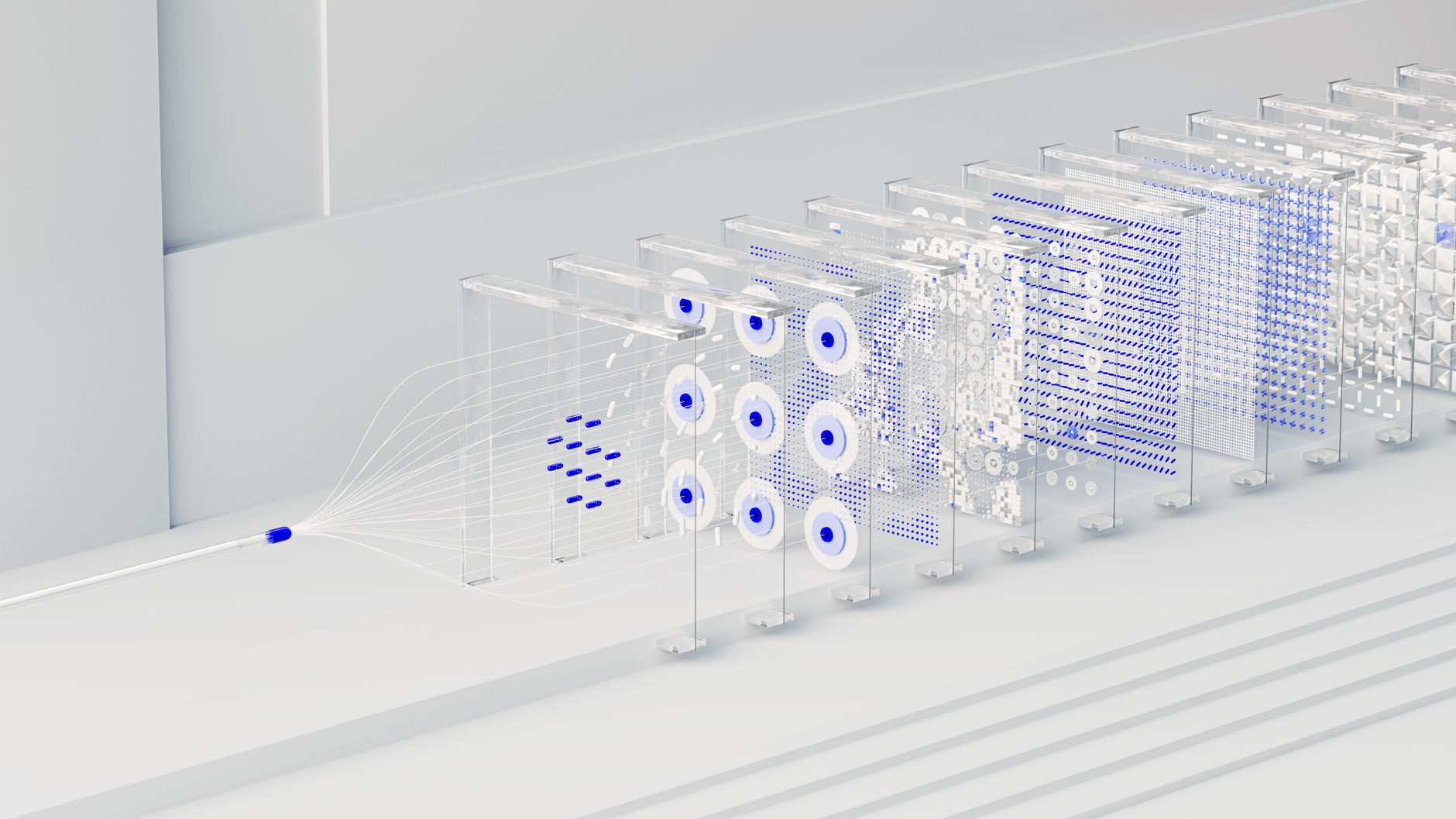
Every previous “multimodal” OpenAI model was, architecturally, multiple models stitched together. Text went through one path, images through another, audio through a third. GPT-5.5 is the first OpenAI model to process text, images, audio, and video through a single unified architecture end-to-end.
This is not a cosmetic change. A unified architecture means the model learns cross-modal relationships during pretraining rather than at inference time. When a GPT-5.5 agent looks at a screenshot and writes code to interact with it, the visual and code reasoning are running in the same representational space — not translated between separate systems.
The practical effect shows up in token efficiency. OpenAI reports that GPT-5.5 uses approximately 40% fewer output tokens to complete the same Codex tasks as GPT-5.4. Less token usage means lower API cost and faster task completion for agentic workloads where long multi-step chains of actions are common.
GPT-5.5 was co-designed with NVIDIA’s GB200 and GB300 NVL72 rack-scale systems. The joint bring-up of a 100,000-GPU cluster completed multiple large-scale training runs — the infrastructure and the model architecture were designed together, not in sequence.
Agentic from the Ground Up
OpenAI’s launch framing is unusually direct about the model’s intended use: GPT-5.5 is an agentic model first, a chat model second. Training focused on four domains — agentic coding, computer use, knowledge work, and early scientific research. These are not fine-tuning targets bolted on after the fact; they shaped the pretraining data mix and the training objectives.
The implication is a shift in how OpenAI is positioning frontier models. GPT-5.4 and its predecessors were optimized around conversation quality and benchmark scores on academic tasks. GPT-5.5 is optimized around sustained, tool-using, multi-step task completion — the kind of work that an AI agent running for hours needs to do reliably.
It became the default model for ChatGPT on May 5, 2026 — two weeks after launch — rolling out to Plus, Pro, Business, and Enterprise plans simultaneously. ChatGPT is now, by default, running an agentic model optimized for extended task sequences rather than single-turn exchanges.
What the Benchmarks Actually Say
The headline numbers are strong. GPT-5.5 scores 88.7% on SWE-bench (software engineering problem solving), 92.4% on MMLU, and 82.7% on Terminal-Bench 2.0, a benchmark measuring autonomous coding and shell task completion. On ARC-AGI-2, a test of novel reasoning, it reaches 85.0% versus GPT-5.4’s 75.8%.
The long-context improvement is the most striking data point. On MRCR v2, which tests retrieval accuracy in very long contexts, GPT-5.5 scores 74.0% compared to GPT-5.4’s 32.2%. That is not a refinement — it is a capability jump, and it reflects the architectural overhaul more than any post-training optimization could.
The hallucination story is more complicated. OpenAI claims 52.5% fewer hallucinations versus GPT-5.4, with improvements concentrated in medicine and law. Independent corroboration of that figure is still limited. Meanwhile, the Artificial Analysis AA-Omniscience benchmark — which tests factual accuracy across a broad knowledge domain — shows GPT-5.5 at 86% hallucination rate, compared to Claude Opus 4.7 at 36% and Gemini 3.1 Pro Preview at 50%.
Those two numbers are not contradictory — OpenAI’s metric measures relative improvement on specific domains, while AA-Omniscience measures absolute accuracy on a broad factual benchmark. Both can be true. But teams evaluating GPT-5.5 for high-stakes knowledge retrieval tasks should run their own domain-specific evals rather than relying on OpenAI’s reported improvement rate alone. We’ve covered this dynamic before in why LLM leaderboards are unreliable proxies for production performance.
What This Means for Developers
For teams running code agents or computer-use pipelines on GPT-5.4, the upgrade case is straightforward: significantly better long-context retrieval, lower token consumption per task, and a model architecture that was designed for multi-step agentic work rather than adapted to it. The 40% token reduction on Codex tasks translates directly to cost.
The unified multimodal architecture also changes what’s practical in agentic pipelines. If you’ve been avoiding multimodal inputs in agent workflows because of the latency and token overhead of separate vision models, GPT-5.5’s native omnimodal processing removes that bottleneck. Computer-use agents that need to see, interpret, and act on the same UI are the obvious beneficiaries.
The caveat is the hallucination picture. On factual knowledge tasks outside the domains OpenAI specifically optimized for, GPT-5.5 still has a meaningful error rate. That has not fundamentally changed. Applications that require high factual precision — legal research, medical documentation, academic citation — should treat the “60% fewer hallucinations” claim as a relative benchmark improvement, not an absolute reliability guarantee, and test accordingly.
GPT-5.4 is still available in the API and will remain so for workloads that have been tuned around it. OpenAI’s own model comparison page now explicitly positions GPT-5.5 as the default for new agentic development. If you’re starting a new agent project in 2026, GPT-5.5 is the rational starting point. If you have a production GPT-5.4 deployment running stably, evaluate the upgrade carefully against your specific task distribution. Our earlier GPT-5.4 review is still a useful baseline for understanding what changed between generations.
The Bigger Picture
GPT-5.5 is the first frontier model where the architectural and training choices were made specifically with agentic use cases in mind from the start, not retrofitted afterward. Whether that makes it the right model for your workload depends on what you’re building — but it marks a real inflection point in how frontier labs are thinking about what “the next generation of models” should optimize for.
The benchmark gap with competitors in certain areas (particularly factual accuracy at scale) suggests GPT-5.5 is not a sweep. It is a strong agentic coding and long-context model that still has open questions in knowledge-dense domains. That is a more useful characterization than either the hype or the dismissiveness it has received since launch.
Further Reading
- Introducing GPT-5.5 — OpenAI’s full launch post, including benchmark methodology and the technical framing for the architectural changes.
- Artificial Analysis: GPT-5.5 is the new leading AI model — Independent benchmark analysis including the AA-Omniscience hallucination data and cross-model comparisons.
- Everything You Need to Know About GPT-5.5 — Vellum’s developer-focused breakdown of API changes, pricing, and migration considerations from GPT-5.4.